Loading...
Serving Altoona, PA and surrounding areas. (814) 552-1557
Building a deck, addition, or garage in Altoona? We dig your footings below the frost line, pull the required permits, and pass the pre-pour inspection - so your structure stays solid through every Blair County winter.
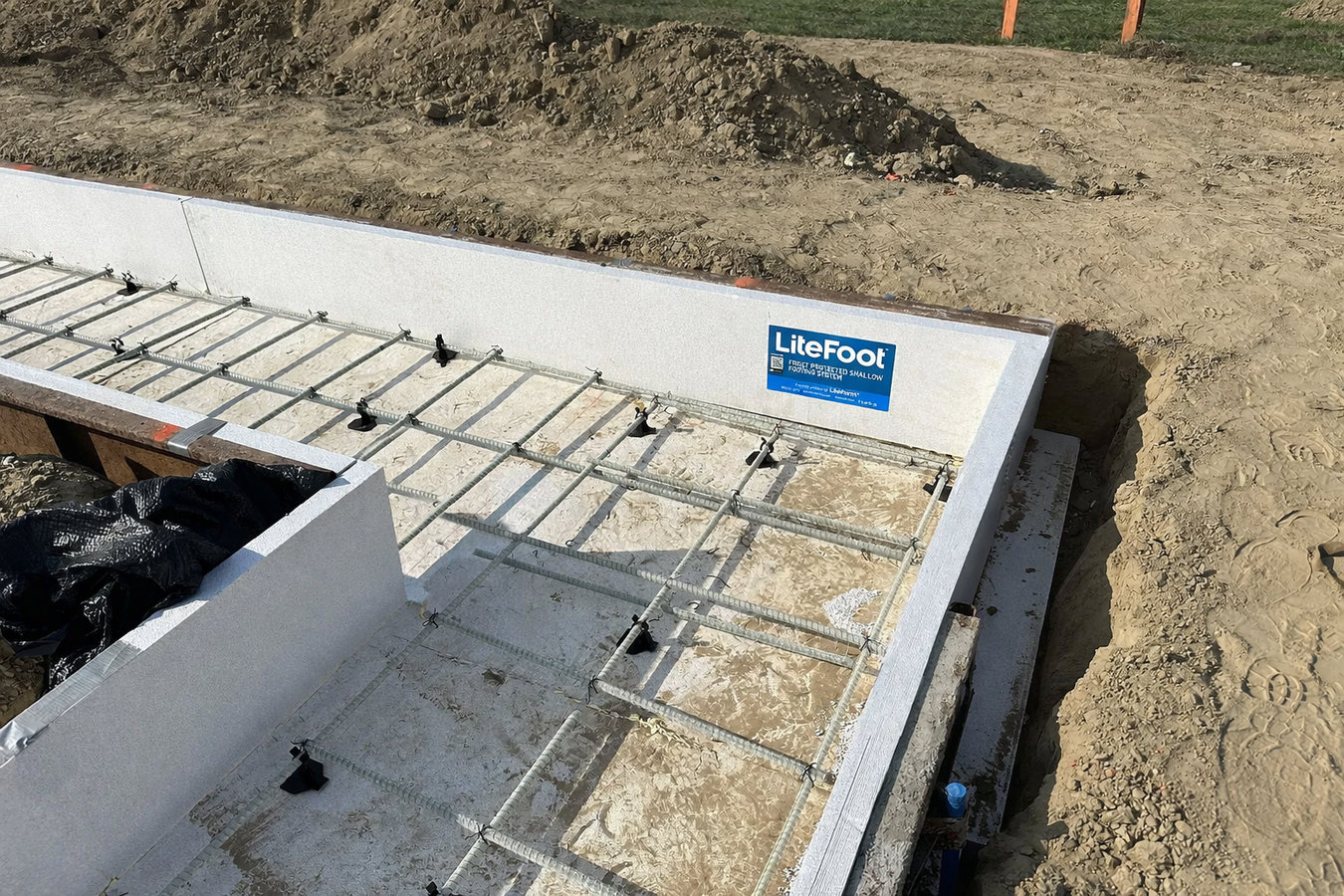
Concrete footings in Altoona are the buried pads or continuous concrete strips that hold up everything above them - a deck post, a garage wall, a porch column, or your home's foundation walls. They need to be dug below the frost line, which in central Pennsylvania means at least 36 inches deep, and poured with steel reinforcement inside. A straightforward deck or small addition typically takes one to two days to excavate, form, and pour, with forms off within 48 hours and framing possible after a week of curing.
Altoona homeowners come to us when they are planning a new structure that needs proper support, when an older deck or porch has started to lean after years of freeze-thaw movement, or when they are adding onto a home that was built decades ago and may have original footings not suited to today's loads. If your project also requires a full slab beneath the structure - rather than isolated footings alone - our foundation installation service covers the complete below-grade scope including poured walls and waterproofing.
Permits are required for most footing work in Altoona, and a city inspector verifies the excavation depth before the concrete is poured. This is genuinely good news for homeowners - it means there is an independent check that the work was done correctly before it gets buried permanently. We handle the permit application so that process does not become your problem.
A gap opening between your deck and the house, or a deck surface that feels tilted when you walk on it, often means the footings underneath have shifted. In Altoona, repeated freeze-thaw cycles push shallow footings upward each winter and let them settle unevenly in spring. This is not a cosmetic issue - a leaning deck can become unsafe quickly.
Hairline cracks are often harmless, but cracks wider than a pencil tip, diagonal cracks from corners, or cracks that appear to be growing over time can signal that footings below are moving or failing. Blair County's clay-heavy soils shift with seasonal moisture changes, putting ongoing stress on older footings. New cracks appearing each spring are worth having a concrete contractor evaluate.
Any new structure attached to or built near your home needs its own properly sized footings buried below the frost line. This is required by code and inspected before the pour. Getting a footing estimate early is smart, since Altoona contractors book quickly once the ground thaws in spring.
When footings settle unevenly, the structure above shifts slightly - and the first place you often notice it is in doors or windows that suddenly do not open and close properly. If this is happening in a room over a crawl space or near an exterior wall, the footings below are worth checking.
We install footings for decks, porches, additions, garages, and detached outbuildings - and we repair or replace footings on older structures where freeze-thaw movement or original undersizing has caused settling or cracking. Every footing job follows the same fundamentals: dug to the correct depth for Altoona's frost line, sized for the load it will carry, steel-reinforced inside, and inspected before the pour. For homeowners adding a structure that requires a continuous footing along a full perimeter - rather than isolated pads under individual posts - the scope is closer to a full foundation job, and our foundation installation service is the right fit for that scope.
On older Altoona properties where existing footings may be too shallow or undersized for a new addition, we assess what is already in the ground before we quote. Building on top of a compromised footing is one of the most common - and most expensive - mistakes homeowners make. If your project is a surface-level slab addition rather than a structure on posts or walls, our foundation installation team handles slab-on-grade work with the same code-compliant process from permit to final sign-off.
Suits new deck and porch projects where code requires isolated pad footings buried below Altoona's frost line before framing can begin.
Suits attached additions and detached garages where a continuous or thickened-edge footing system carries wall and roof loads to stable bearing soil.
Suits older Altoona homes where original footings have shifted, cracked, or been exposed above grade by frost heave over the years.
Altoona sits in Blair County in the Allegheny Mountains, where the ground freezes to roughly 36 inches in a hard winter. That is deeper than many warmer Pennsylvania cities require, which means more excavation, more concrete, and more time before other work can begin. The freeze-thaw cycles here are relentless - water enters small gaps in the soil around a footing, freezes, expands, and pushes the concrete pad upward. A footing installed above that frost line will move every winter, and anything built on top of it will crack and shift along with it. We serve customers throughout the region, including those in Hollidaysburg where the terrain and frost conditions closely mirror what we see across Altoona.
Much of Altoona's housing stock was built in the early to mid-20th century, when building standards were different and the loads placed on footings were often lighter than what homeowners want to build today. Adding a large deck, a sunroom, or a detached garage to a home from that era often means dealing with original footings that either need reinforcement or replacement before new work can begin on top of them. Customers in Duncansville bring us similar projects where older properties need a code-compliant footing upgrade before a modern addition can safely go up. For more on how footing depth and frost-line requirements apply to Pennsylvania construction, the Penn State Extension covers local soil and frost considerations in plain language.
We ask what you are building or repairing and roughly where on your property. Most jobs need a site visit before we give you a firm price - footing depth, soil conditions, and access all affect cost in ways that cannot be assessed over the phone. We schedule that visit promptly and follow up with a written estimate.
For most footing work in Altoona a building permit is required before excavation begins. We handle the application, schedule the required inspection, and give you a copy of the permit for your records. The permit process typically adds a few days to the start of the job - factor this into your timeline.
On the day work begins, the crew digs to the required depth - in Altoona that typically means at least 36 inches to get below the frost line. A building inspector visits to verify depth and dimensions before any concrete is poured. This inspection is required and protects you - it is an independent check that the work meets code before it gets buried.
Once the inspection passes, the crew pours concrete with steel reinforcement already in place. Forms come off within 24 to 48 hours, but the concrete needs at least one week - and ideally longer - before structural loads are placed on it. We walk you through the curing timeline and when framing can safely begin.
Free written estimate. We reply within one business day. Spring fills fast - reach out now.
The ground in central Pennsylvania freezes to roughly 36 inches in a typical winter. Every footing we install goes below that depth so freezing soil cannot push it upward year after year. A contractor who proposes shallower footings to save time is setting you up for expensive structural problems down the road.
Footing work in Altoona requires a building permit and a pre-pour inspection through the city's building department. We handle every step - application, scheduling, and final sign-off - so you receive documentation showing your work was independently verified. That paperwork matters when you sell or refinance.
Much of Altoona's housing stock dates from the early to mid-1900s. Original footings on these properties were designed under older standards and may not support a modern deck or addition without reinforcement. We assess what is already there before writing any number, so you are not building on a base that will fail in five years.
Parts of the Altoona area have clay-rich soils that expand when wet and contract when dry. We size footings to account for this movement and recommend a soil check when your yard holds water after rain. Getting this right at installation is far less expensive than correcting a footing that has shifted after the structure above it was built.
Footings are the part of your project you will never see again once the concrete sets - which is exactly why getting them right the first time matters more than anything else. We build them to the depth and standard that Altoona's climate and Blair County code require, with the permits and inspection record to prove it. The American Concrete Institute sets the nationally recognized standards for residential concrete construction that guide our footing work on every project.
Lift and stabilize a settled foundation on an existing Altoona home, correcting the movement that poor or aging footings allowed to happen.
Learn MoreFull below-grade foundation systems for new builds and additions - poured walls, waterproofing, and drainage, not just the footings alone.
Learn MoreAltoona contractors fill their spring calendars fast once the ground thaws. Call or message us now to get on the schedule before the rush hits.